The quality of an ice cream wafer cone depends on more than the recipe. Baking temperature, batter distribution, forming accuracy, cooling, and production consistency all influence the final cone. For businesses planning commercial wafer cone manufacturing, understanding the complete baking process is an important step before selecting production equipment.
A well-designed wafer cone baking process can help manufacturers produce crisp, evenly baked cones with consistent shape and thickness. It can also reduce manual handling and make production easier to control.
This guide explains how wafer cones are produced, what equipment is involved, and how manufacturers can choose a suitable solution for medium-scale commercial production.
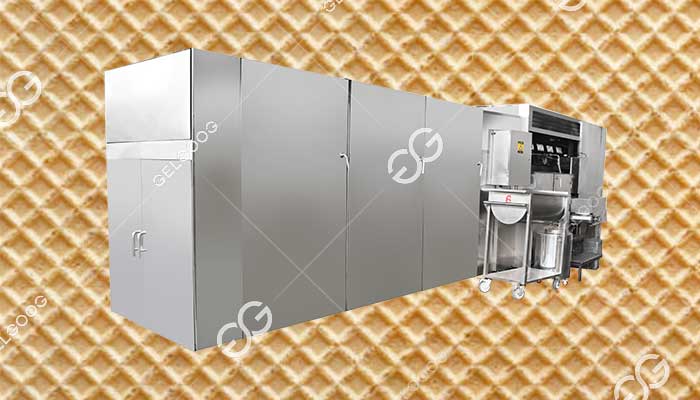
1. What Is the Wafer Cone Baking Process?
The wafer cone baking process converts prepared batter into a thin, crisp edible cone through controlled heating and forming.
A typical process includes:
- Batter preparation
- Batter dosing
- Mold heating
- Wafer sheet baking
- Cone forming
- Cooling
- Inspection and collection
- Packaging
Each stage affects the final product. For example, uneven batter distribution can create different cone thicknesses, while unstable heating may cause underbaked or overbaked areas.
For commercial manufacturers, the goal is to create a repeatable process that delivers similar color, texture, size, and shape throughout production.
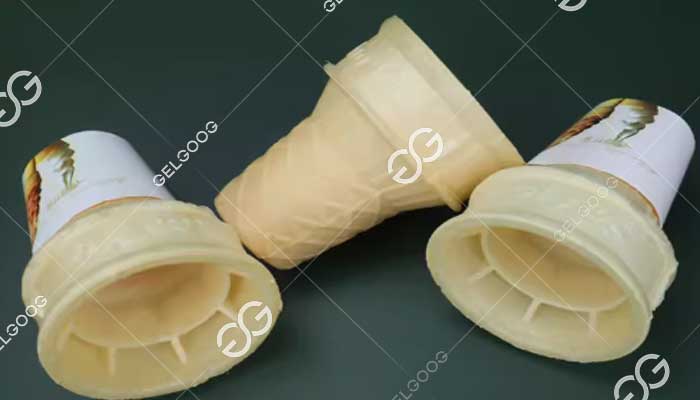
2. How Are Wafer Cones Made?
Batter Preparation
The process starts with a wafer batter of flour, sugar, eggs, milk, oil, and water. Formulation varies by taste, texture, color, and strength. Mix thoroughly for smooth, uniform consistency to support even heating and stable production.
Batter Dosing and Mold Filling
Batter is introduced into heated molds. Accurate dosing affects cone thickness and finished weight. Maintain consistent dosing across batches to reduce variations between cones.
Baking and Heat Control
Baking removes moisture and develops crisp texture without burning. Controlled heating provides repeatable conditions. Temperature and time depend on recipe, cone design, mold configuration, and equipment model. Typical baking time is about one minute; output varies by mold quantity.
Forming the Cone
Immediately after baking, form the wafer sheet while still flexible. Forming determines diameter, height, opening, and appearance. Consistent forming is critical for fitting filling and serving equipment.
Cooling and Collection
After forming, cool cones to stabilize structure and maintain crispness. Allow sufficient space for collection and cooling while minimizing manual handling.
3. What Equipment Is Needed for Commercial Wafer Cone Manufacturing?
A complete commercial cone bakery equipment setup may include several functional units:
- Batter mixing equipment
- Batter dosing or filling system
- Heated baking molds
- Cone forming equipment
- Cooling or conveying equipment
- Collection and packaging equipment
The required configuration depends on production volume, available factory space, product dimensions, labor availability, and the desired degree of automation.
For businesses moving from manual production to a more efficient process, a semi-automatic configuration can provide a practical balance between equipment investment and production efficiency.
For example, the [wafer cone production equipment] can be used as an option for businesses seeking a semi-automatic solution with multiple mold configurations. The referenced models include 40, 60, and 120 baking molds, with listed capacities ranging from 1,200 to 4,500 pieces per hour.
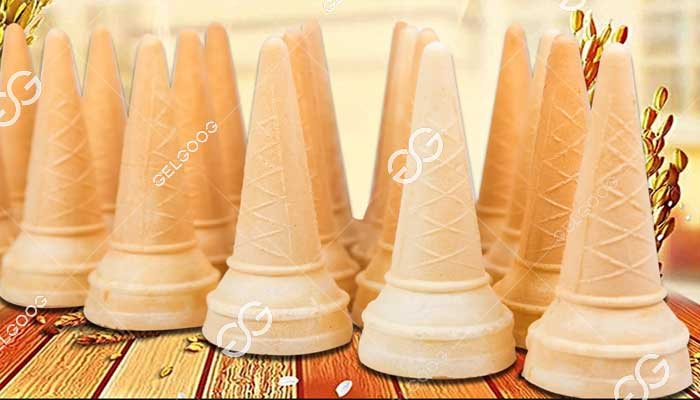
4. Why Choose Medium-Scale Wafer Cone Production?
Not every manufacturer needs a fully automated factory immediately. For ice cream shops, dessert makers, regional producers, and growing businesses, medium-scale production offers a flexible starting point.
A semi-automatic approach offers several advantages:
Lower Initial Investment
Introduce mechanical baking and forming without a full high-capacity automated line.
Easier Operation
Operators handle filling, collection, and inspection while the machine manages core baking.
Flexible Product Development
Different molds support various cone shapes and sizes, allowing product testing before larger investment.
Easier Capacity Expansion
Start with moderate output and scale up as market demand grows.
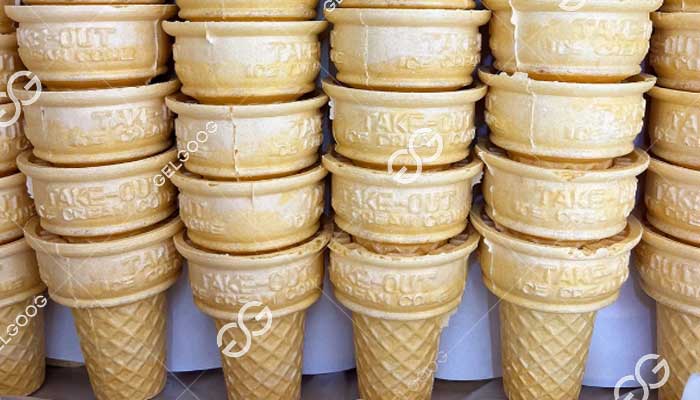
5. How to Improve Wafer Cone Quality
Consistent quality depends on controlling several variables rather than focusing on baking temperature alone.
Control the batter: Keep the formulation and mixing method consistent.
Maintain stable heating: Sudden temperature changes can affect color, crispness, and moisture removal.
Use consistent dosing: Similar batter quantities help maintain uniform cone thickness.
Monitor forming: Correct forming timing helps prevent cracks, deformation, or incomplete shaping.
Clean the molds regularly: Batter residue can affect product appearance and interfere with smooth production.
Inspect finished cones: Check color, shape, cracks, thickness, and crispness before packaging.
The referenced equipment page also recommends cleaning the molds and machine surface after use and paying close attention to temperature control during operation.
6. How to Choose Wafer Cone Baking Equipment
When comparing ice cream cone bakery equipment, buyers should consider more than advertised production capacity.
Important factors include:
- Required pieces per hour
- Number of baking molds
- Cone dimensions and shape
- Heating method
- Electrical requirements
- Available factory space
- Labor requirements
- Cleaning and maintenance
- Future production expansion
For example, the current equipment range includes models with different mold quantities and dimensions, allowing manufacturers to select a configuration according to their production requirements.
The best equipment is not necessarily the machine with the highest theoretical output. It should match the actual production target, recipe, product specifications, workforce, and factory layout.
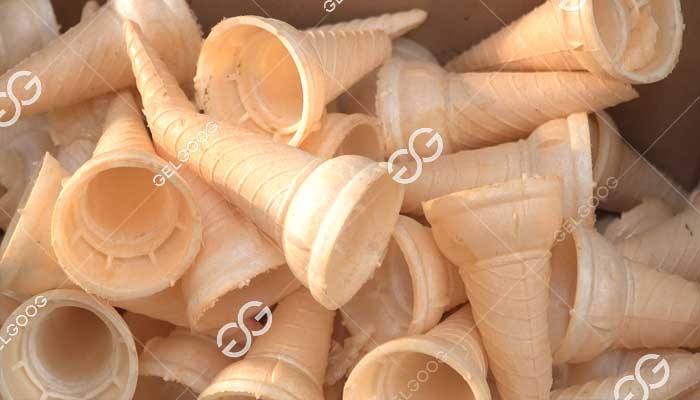
7. Frequently Asked Questions About Wafer Cone Production
How long does it take to bake a wafer cone?
The baking time depends on the recipe, mold, heating system, and desired product characteristics. The referenced equipment lists approximately one minute of baking time for its models.
What affects wafer cone crispness?
Moisture content, batter formulation, baking conditions, cooling, and storage all influence crispness. Stable baking and proper cooling are particularly important.
Is semi-automatic production suitable for a growing food business?
Yes. A semi-automatic setup can be suitable for businesses that need more production efficiency than manual methods while maintaining operator involvement and flexible production.
Can different cone shapes be produced?
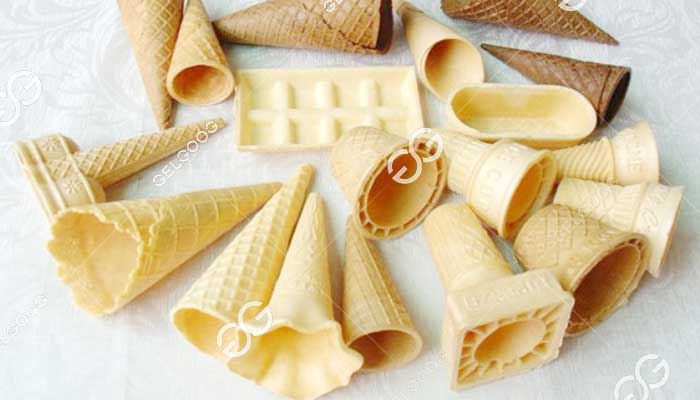
Depending on the mold design, manufacturers can produce different shapes and sizes. Mold selection should be discussed according to the required finished product.
Conclusion
A reliable wafer cone baking process combines consistent batter preparation, accurate dosing, controlled heating, effective forming, and proper cooling. For businesses entering or expanding commercial wafer cone manufacturing, selecting equipment according to real production requirements is essential.
Medium-scale wafer cone production equipment can provide a practical balance between productivity, flexibility, investment, and manual operation. By choosing the right mold configuration and production capacity, manufacturers can build a stable process today while leaving room for future expansion.
 One-Stop Solution


