The ice cream cone market in North America and Europe continues to benefit from strong ice cream consumption, premium frozen desserts, and demand for convenient single-serve formats. Sugar cones, wafer cones, waffle cones, and specialty cones serve ice cream shops, foodservice businesses, retail brands, and industrial ice cream manufacturers.
For cone manufacturers, these markets create opportunities for automated ice cream cone production, consistent baking quality, customized shapes, and higher production efficiency.
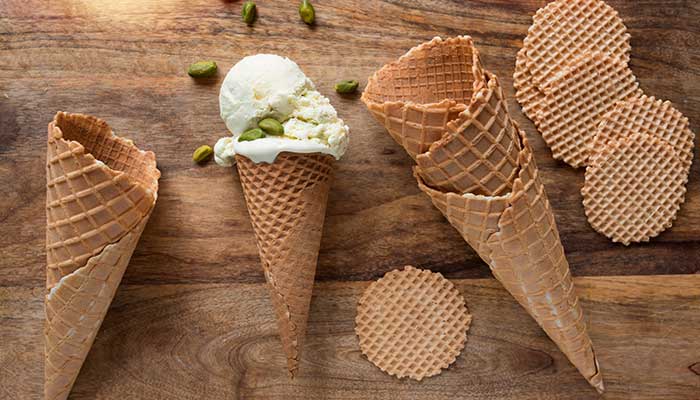
Ice Cream Cone Market Overview
The ice cream cone industry is closely tied to the broader ice cream market:
- North America – ~USD 24.9 billion (2026 est.)
- Europe – ~USD 18.7 billion (2026 est.)
Cones are among the faster-growing product formats in both regions. The global market continues to expand, with North America leading and Europe remaining a major market for wafer and sugar cones.
Key market drivers:
- Rising premium and artisanal ice cream consumption
- Growth of ice cream shops and dessert stores
- Demand for convenient single-serving desserts
- Increasing variety of cone designs and customization
- Advancements in automated cone manufacturing
- Need for consistent texture, shape, color, and baking quality

North America Ice Cream Cone Market
The market is driven by a mature ice cream industry, extensive retail and foodservice networks, and strong demand for premium frozen desserts. The U.S. is a key market, with premium and gourmet ice cream identified as a major growth area.
Popular cone types:
- Sugar cones – Sweet, crisp; ideal for premium servings
- Wafer cones – Lightweight and crispy
- Waffle cones – Thicker texture with distinct baked patterns
- Cake cones – Light-textured; used for standard servings
- Specialty cones – Chocolate-coated, flavored, or custom designs
This variety supports demand for industrial cone machines capable of handling different sizes, shapes, and formulations.

Europe Ice Cream Cone Market
Europe has a strong ice cream and gelato culture, especially in Italy, Germany, France, Spain, and the UK. The market is projected to grow from ~USD 18.7 billion (2026) to over USD 23.3 billion by 2033, with cones expected to be the fastest-growing segment.
Key trends:
- Premium gelato and artisanal ice cream
- Traditional wafer and sugar cone products
- New flavors and textures
- Chocolate-coated and specialty cones
- Smaller portion sizes
- Customized shapes and designs
- More efficient automated production
For European manufacturers, cone appearance and texture are especially important, as the cone contributes to the overall dessert experience.
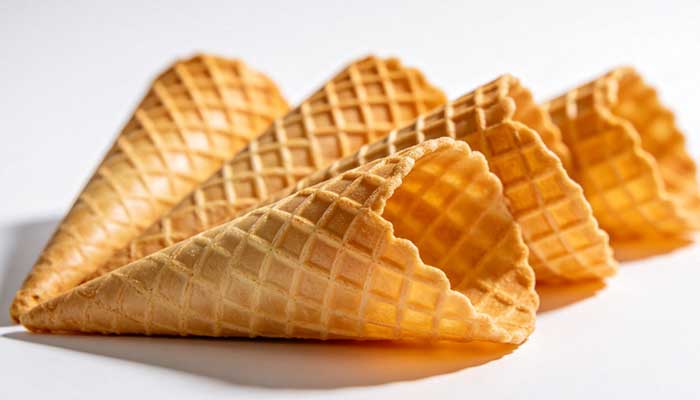
Sugar Cone vs. Wafer Cone
Sugar cones generally have a sweeter and firmer texture, making them suitable for premium ice cream and foodservice applications.
Wafer cones are typically lighter and crispier and can be produced in different shapes and sizes.
| Cone Type |
Main Characteristics |
Common Applications |
| Sugar Cone |
Sweet, crisp, firm |
Premium ice cream, foodservice |
| Wafer Cone |
Light, crispy |
Retail and ice cream shops |
| Waffle Cone |
Rich baked texture |
Premium and artisanal ice cream |
| Cake Cone |
Light and mild |
Standard ice cream servings |
Manufacturers can select equipment according to product type, target capacity, cone size, and required automation level.
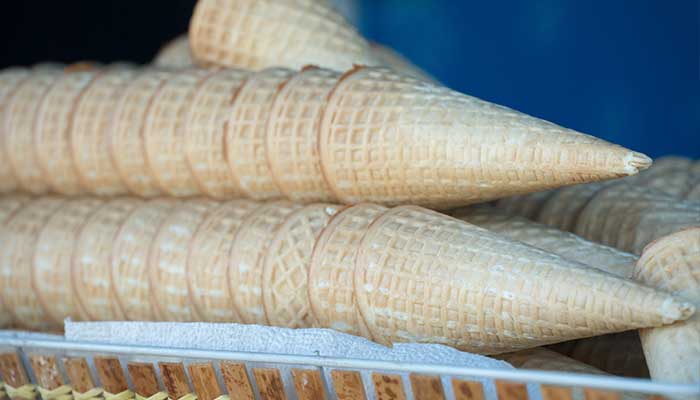
Industrial Ice Cream Cone Production
A typical production line integrates multiple stages for consistency and efficiency:
Batter preparation → Injection → Baking → Rolling/Forming → Cooling → Counting → Packaging
Automation reduces manual intervention and ensures consistent dimensions and baking quality.
For large-scale output, an industrial sugar cone line can produce approximately 3,000–7,500 cones per hour, depending on configuration and operating conditions.
Key Equipment Considerations
When selecting an ice cream cone production machine, evaluate:
- Production capacity – Match hourly output to market demand.
- Cone specifications – Diameter, height, weight, thickness, and shape.
- Heating system – Choose based on factory setup (gas or electric).
- Automation level – Automatic feeding, baking, forming, cooling, and counting improve consistency.
- Material & hygiene – Food-grade stainless steel for easy cleaning and durability.
- Product flexibility – Interchangeable molds to support various cone designs.
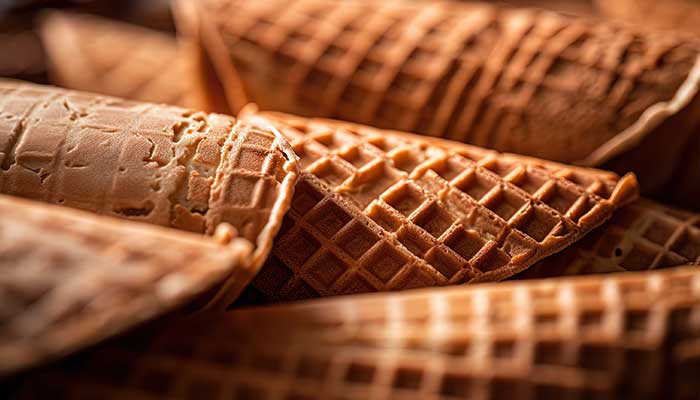
The baker is critical as it affects color, crispness, moisture, and overall quality. For commercial/industrial use, ensure:
- Uniform heating and stable temperature
- Consistent cone thickness
- Easy operation and cleaning
- Adjustable parameters and reliable continuous operation
Future Opportunities for Cone Manufacturers
Key trends in North America and Europe include automation, premiumization, and product differentiation. Opportunities exist for:
- Premium sugar cones
- Large waffle cones
- Chocolate-coated, flavored, or specialty cones
- Gluten-free or alternative formulations
- Customized shapes
- High-speed automated lines

Conclusion
North America and Europe offer strong growth potential for sugar, wafer, waffle, and specialty cone manufacturers. North America benefits from a large ice cream and foodservice market, while Europe is driven by gelato culture and premium demand.
Investing in the right automatic cone machine or integrated line (batter prep → baking → forming → cooling → packaging) can improve consistency, capacity, and flexibility. For a complete solution, explore the Industrial Sugar Cone Production Line.
 One-Stop Solution


