Sugar cones are widely used by ice cream manufacturers, bakeries, dessert producers, and food processing companies. For commercial production, a stable sugar cone production process helps manufacturers achieve consistent cone size, color, texture, and output.
A typical industrial process includes batter preparation, batter feeding, baking, cone forming, cooling, counting, and packaging. This guide explains how sugar cones are made in a factory and what factors affect finished cone quality.
What Is the Sugar Cone Production Process?
The sugar cone production process converts prepared batter into thin, crispy sheets and forms them into cone shapes.
Production Flow:
Batter Preparation → Batter Feeding → Baking → Cone Forming → Cooling → Counting → Packaging
Each stage affects the finished product. Batter consistency influences sheet formation, baking determines color and crispness, while forming and cooling affect cone shape and strength.
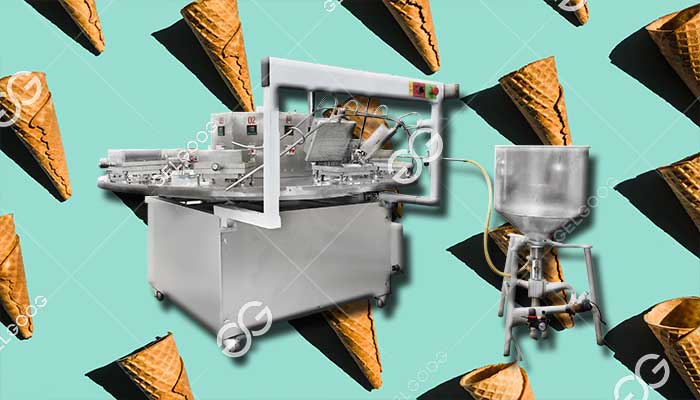
How Are Sugar Cones Made in a Factory?
- Batter Preparation – Flour, sugar, eggs, water, and oil are mixed into a consistent batter.
- Batter Feeding – The batter is dosed onto heated baking plates automatically.
- Baking – The batter is baked into thin, crispy sheets with uniform color, thickness, and flexibility.
- Cone Forming – While still hot, the sheet is rolled around a mold into a cone shape.
- Cooling – Cones cool on a conveyor to set their shape and reduce deformation.
- Counting and Packaging – Cooled cones are inspected, counted, stacked, and packaged to protect crispness and prevent moisture absorption.
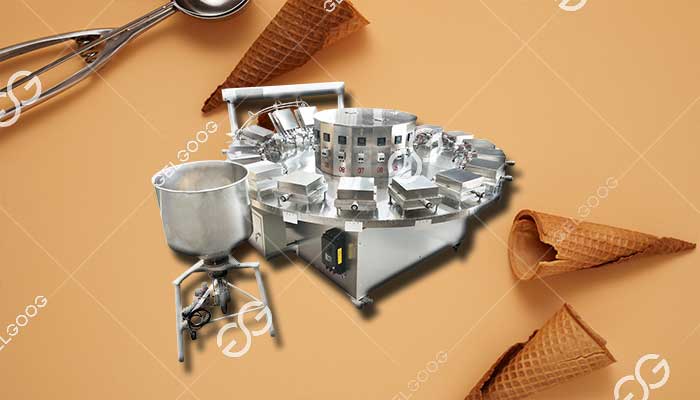
What Equipment Is Used for Commercial Sugar Cone Production?
A commercial sugar cone production system may include:
| Equipment |
Main Function |
| Batter Mixer |
Prepares uniform batter |
| Feeding System |
Controls batter dosing |
| Baking System |
Produces thin crispy sheets |
| Forming System |
Shapes sheets into cones |
| Cooling Conveyor |
Cools finished cones |
| Counting System |
Counts products |
| Packaging Machine |
Protects finished cones |
The equipment configuration depends on production capacity, cone specifications, factory layout, power supply, and packaging requirements.
For larger factories, these stages can be integrated into a complete industrial sugar cone production line.
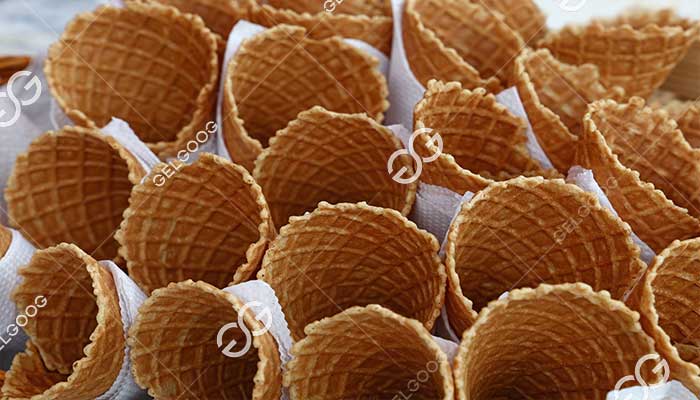
What Factors Affect Sugar Cone Quality?
-
Batter Consistency – Stable viscosity ensures uniform sheet thickness and weight.
-
Baking Conditions – Consistent temperature and time control color, texture, and crispness.
-
Forming Speed – The sheet must be formed while still flexible; delays cause cracking.
-
Cooling – Proper cooling helps the cone hold its final shape.
-
Packaging – Moisture protection is essential to preserve crispness.
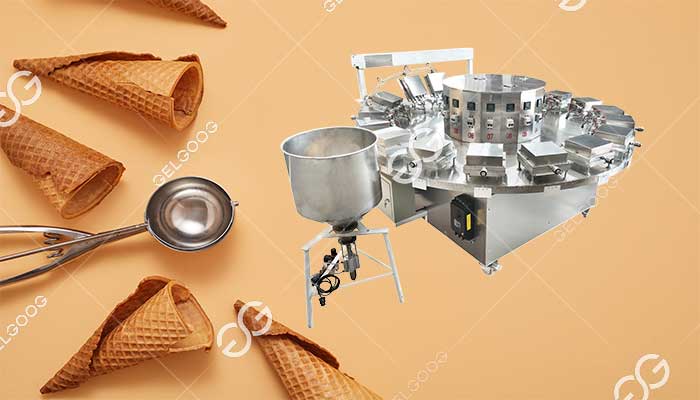
How to Choose Equipment for Sugar Cone Manufacturing?
Before purchasing equipment, manufacturers should define:
- Required production capacity
- Cone length and diameter
- Cone thickness
- Cone pattern
- Heating method
- Factory power supply
- Available production space
- Packaging requirements
- Required automation level
For small or medium production, a suitable forming and baking system may be sufficient. Larger ice cream manufacturers may benefit from an integrated continuous production solution.
Choosing the Right Sugar Cone Production Solution
A reliable sugar cone manufacturing process requires coordination between batter preparation, baking, forming, cooling, and packaging.
If you are planning a complete factory project, explore our industrial sugar cone production solution for an integrated processing system.
For manufacturers looking for equipment specifically for cone forming, see our rolled sugar cone forming equipment page for machine configuration, capacity, and customization options.
Send us your target capacity, cone size, product requirements, and factory power supply to receive a suitable equipment configuration.
 One-Stop Solution


